
Gluten-free diet
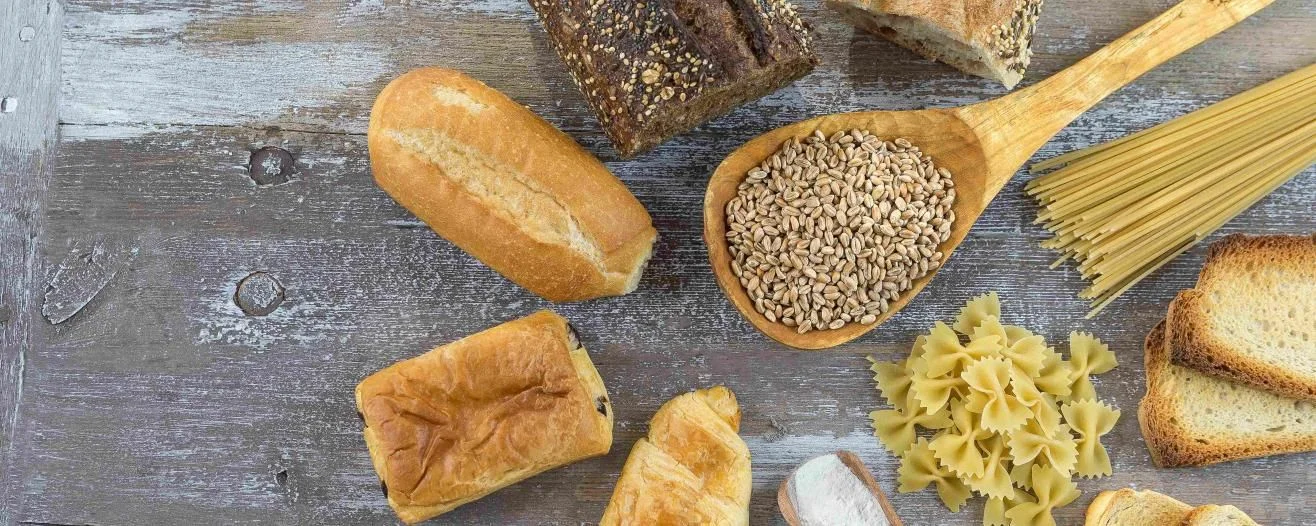
Gluten: Definition, properties, and nutritional significance
Gluten is a natural component of many types of grain and plays a central role in food processing. Due to its viscoelastic properties, it is also referred to as gluten protein. However, gluten is problematic for people with gluten-associated conditions such as celiac disease or gluten sensitivity and should be completely eliminated.
Gluten – structure and function
Gluten is the most primary storage protein in many types of grain and is also referred to as gluten protein due to its viscoelastic properties. The term comes from the Latin gluten = "glue." Gluten is a mixture of about 90% proteins, 8% lipids, and 2% carbohydrates. It is formed when flour is mixed with water and forms a rubbery, elastic mass. This structure is essential for the baking performance of dough, as it binds water, stabilizes dough, and ensures elasticity.
Which types of grain contain gluten?
The following grains contain gluten:
- Wheat (including durum wheat, einkorn, emmer, kamut)
- Rye
- Barley
- Spelt and green spelt (unripe spelt)
- Triticale (a cross between wheat and rye)
Many of these grains are closely related. For example, spelt, green spelt, kamut, emmer, and einkorn belong to the wheat family. Like wheat itself, they contain certain protein components called prolamins, which have a adverse immunological response in people with celiac disease.
Prolamines as triggers of the immune response in celiac disease
Prolamins are alcohol-soluble storage proteins that form an essential component of gluten. They are primarily responsible for intolerance in celiac disease and differ in name depending on the type of grain:
- Gliadin (in wheat)
- Hordein (in barley)
- Secalin (in rye)
The functional properties of gluten in food processing
Gluten performs numerous technological functions in food processing:
It acts as an emulsifier and carrier of flavor compounds, binds water, gels, and stabilizes dough, giving it the desired elasticity. Its binding characteristics also enhance baking performance and play a key role in determining the texture of baked goods.
Due to these multifunctional characteristics, gluten is widely used not only in baked goods, but also in ready meals, sauces, and as a technical additive.
Gluten as a contributor to health complications
People with gluten-associated conditions such as celiac disease or non-celiac gluten/wheat sensitivity are sensitive to the consumption of foods containing gluten. While even the smallest amounts can cause damage to the intestinal mucosa and long-term symptoms in people with celiac disease, gluten often causes symptoms such as abdominal pain, flatulence, fatigue, or cognitive difficulties in susceptible individuals, even without measurable immune responses.
You may also be interested in

Case studies
Read more: Case studies
Quality
Read more: Nutritional quality
Studies and research
Read more: Studies and research
Sources
- Biesiekierski JR. What is gluten? J Gastroenterol Hepatol. 2017 Mar;32 Suppl 1:78-81. doi: 10.1111/jgh.13703. PMID: 28244676.
- Shewry P. What Is Gluten—Why Is It Special? Front Nutr. 2019 Jul 5;6:101. doi: 10.3389/fnut.2019.00101. PMID: 31334243; PMCID: PMC6625226.