
Wheat allergy (WA)

Pathogenesis and main allergens of wheat allergy
Wheat allergy is an immunologically mediated hypersensitivity reaction to specific proteins found in wheat. Its pathogenesis involves both IgE-mediated immediate responses and T-cell-mediated delayed reactions.
Why wheat is allergenic: insight into the immunological triggers
Wheat contains a diverse array of protein components with allergenic potential. Among these, heat- and digestion-resistant proteins are particularly significant, as they retain their allergenicity even after food processing.
Key allergenic protein fractions in wheat include:
- Gliadin and glutenin (approximately 80%): These are the primary constituents of gluten and are highly allergenic.
- Albumin (approximately 15%)
- Globulin (approximately 5%)
These proteins can elicit both systemic and organ-specific immune responses, depending on individual sensitization profiles.
Main allergens in wheat allergy
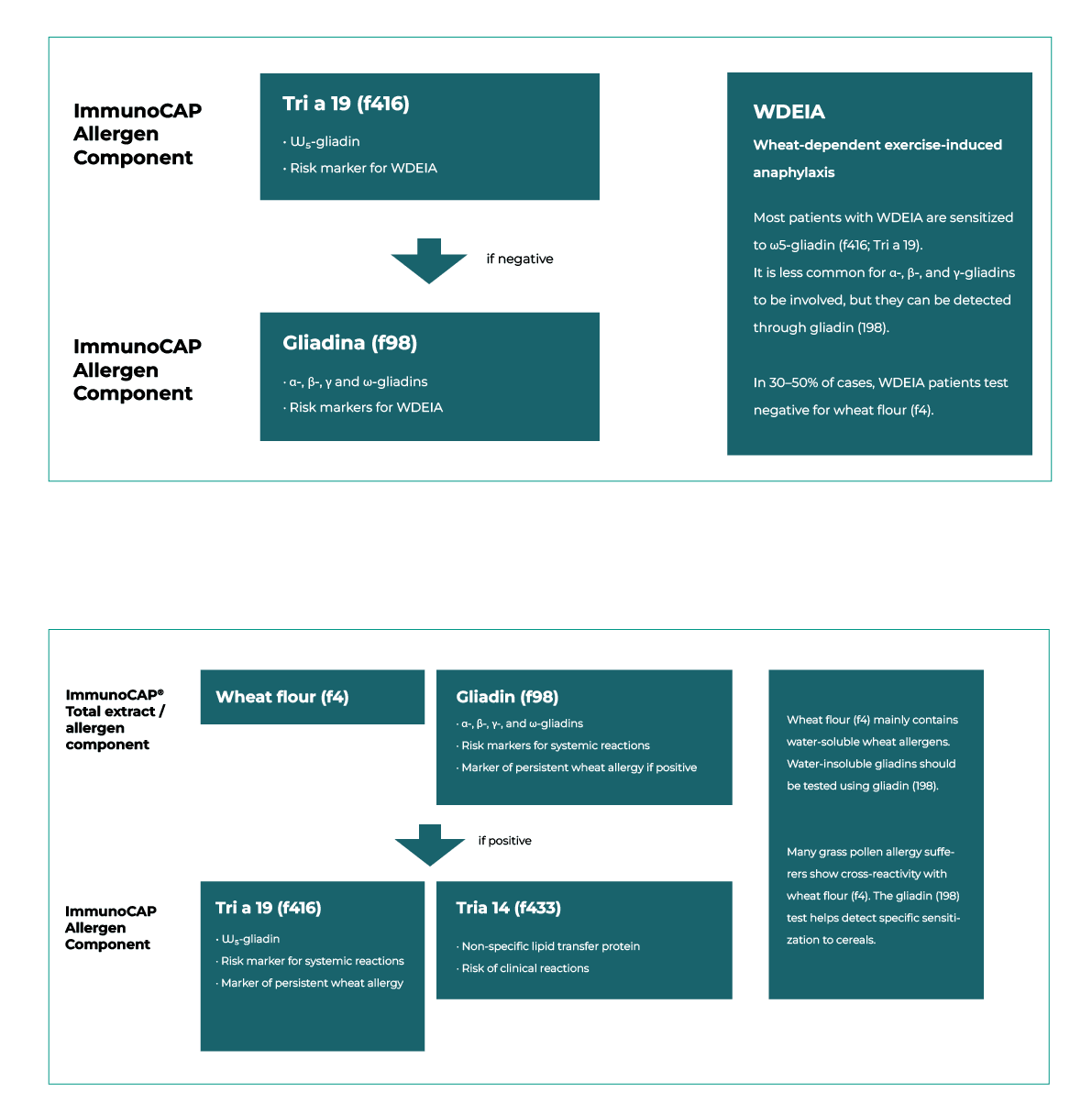
According to the allergen nomenclature established by the World Health Organization (WHO) and the International Union of Immunological Societies (IUIS), 28 distinct wheat allergens have been identified. These proteins vary in structure, stability, and immunological relevance. Several are considered clinically significant:
Additionally, gliadins and glutenins-core components of gluten-are classified as major allergens. These proteins are relevant not only in wheat allergy but also in celiac disease, although the latter is a non-allergic, T-cell-mediated condition.
Dr. Schär Institute Newsletter
Bundled gluten-related disorders (GRDs) expertise for your practice: our newsletter keeps you up to date on celiac disease and related topics.
You may also be interested in

Celiac disease: Pathogenesis
Read more: Pathogenesis
Practical guide to the diagnosis of wheat allergy
Read more: Diagnosis
Sources
- Thermo Fisher Diagnostics (images)
- Neyer A, Dölle-Bierke S, Höfer V, Grünhagen J, Beyer K, Worm M. Prevalence and Clinical Symptoms of Wheat Allergy in Adults and Adolescents in Central Europe. Clin Exp Allergy. 2025 Apr;55(4):319-329. doi: 10.1111/cea.70017. Epub 2025 Feb 19. PMID: 39973050; PMCID: PMC11994253.
- German Society for Gastroenterology, Digestive and Metabolic Diseases (DGVS). (2021). S2k Guideline on Celiac Disease (AWMF Registry Number 021-021). Association of Scientific Medical Societies (AWMF).