
Celiac disease: Histological remission and follow-up care on a gluten-free diet
A recent analysis shows how histological findings develop in adults with celiac disease on a gluten-free diet and why follow-up care should be standardized.
Histological follow-up in adults with celiac disease on a gluten-free diet
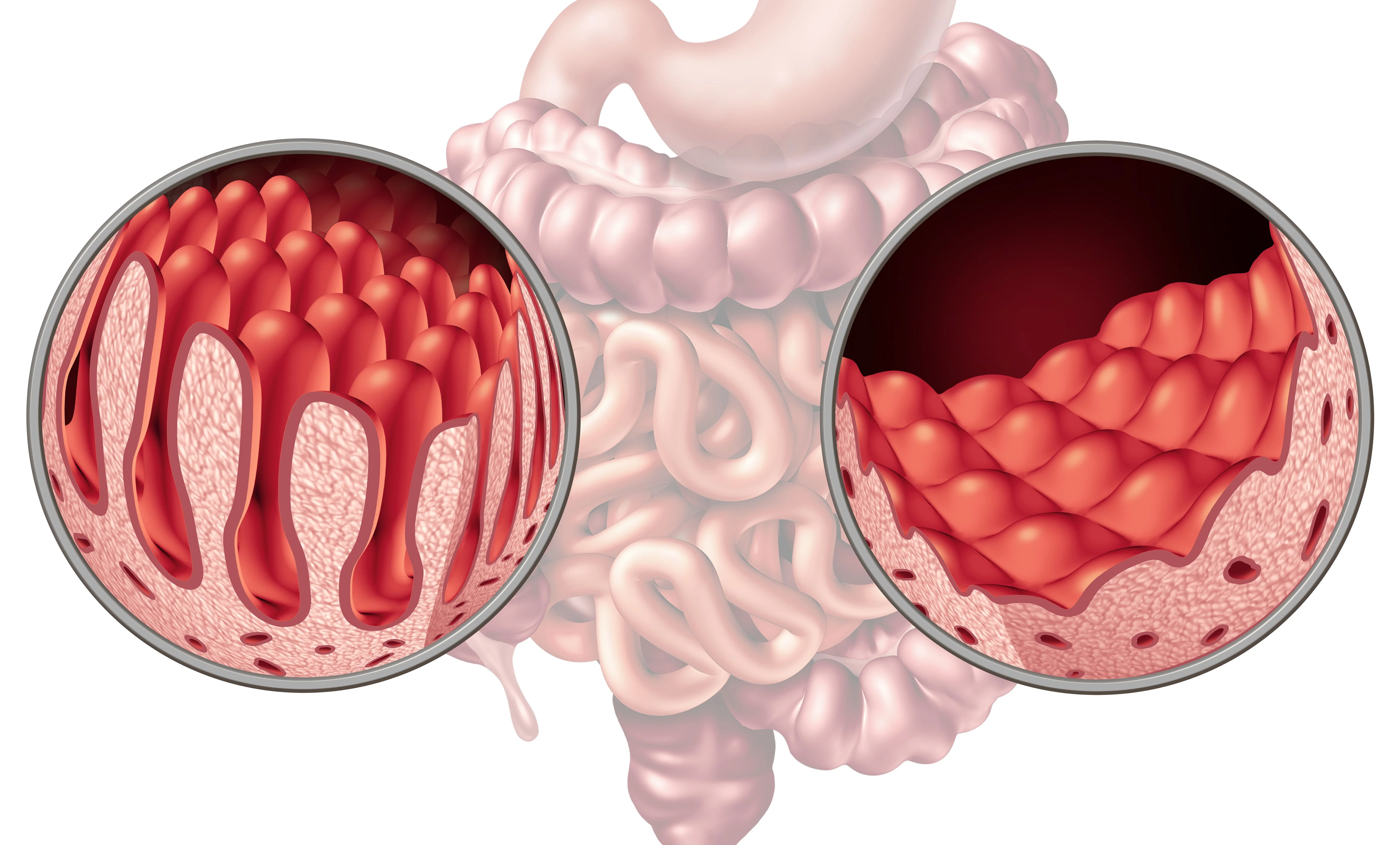
There is still no consensus on histological follow-up during long-term treatment of adult patients with celiac disease who are following a gluten-free diet. Despite clinical and serological improvement, some of those affected continue to show persistent villous atrophy. The aim of the study by Daniel Vasile Balaban et al. was to summarize the current evidence on histological findings in adults with celiac disease following a gluten-free diet. The study focused on the rate of mucosal healing, the assessment methods used, and the underlying remission criteria. A literature review was conducted, evaluating data from published cohort studies involving adult patients with celiac disease on a gluten-free diet. Biopsy data, demographic information, baseline histology, duration and adherence to the gluten-free diet, serological status, and histological remission rates, including the remission criteria used, were extracted from the follow-up phase.
Results
A meta-analysis of 46 studies including 15,530 patients with celiac disease (73% women; mean age 41 years) found an overall mucosal healing rate of 58.8% on a gluten-free diet. Interpretation of this finding is challenging because definitions of healing varied across studies. Some studies used stringent criteria (Marsh 0), while others considered Marsh 1 or the absence of villous atrophy (Marsh <3) as evidence of remission. Differences in histologic and morphometric criteria, including villous height-to-crypt depth ratios, also contributed to variability in reported healing rates.
Importance of the gluten-free diet and standardized follow-up
Longer duration of a gluten-free diet and more rigorous assessment of dietary adherence were associated with higher rates of mucosal healing. Reported healing rates in adults with celiac disease vary considerably across studies, largely due to differences in the definitions of mucosal healing and methods used to evaluate gluten-free diet adherence. Standardized, validated measures for both histologic outcomes and dietary adherence are needed to support consistent patient monitoring and long-term follow-up.
You may also be interested in...

3 interesting clinical cases from a nutrition consultation
Read more: 3 interesting clinical cases from a nutrition consultation
FODMAP Manipulation for Exercise-Associated GI Symptoms: A Severity-Led Approach
Read more: FODMAP Manipulation for Exercise-Associated GI Symptoms
Sorghum: properties and uses in a gluten-free diet
Read more: Sorghum: properties and uses in a gluten-free diet
Sources
Balaban DV, Enache I, Balaban M, et al. Outcomes in Adults with Celiac Disease Following a Gluten-Free Diet. J Clin Med. 2025;14(14):5144. Published 2025 Jul 20. doi:10.3390/jcm14145144