
Buckwheat in a gluten-free diet: safety and nutritional value
Find out if buckwheat contains gluten. We review its safety, nutritional profile and role in a gluten-free diet, including buckwheat flour.
Buckwheat in the gluten-free diet: safety, nutritional value and clinical use
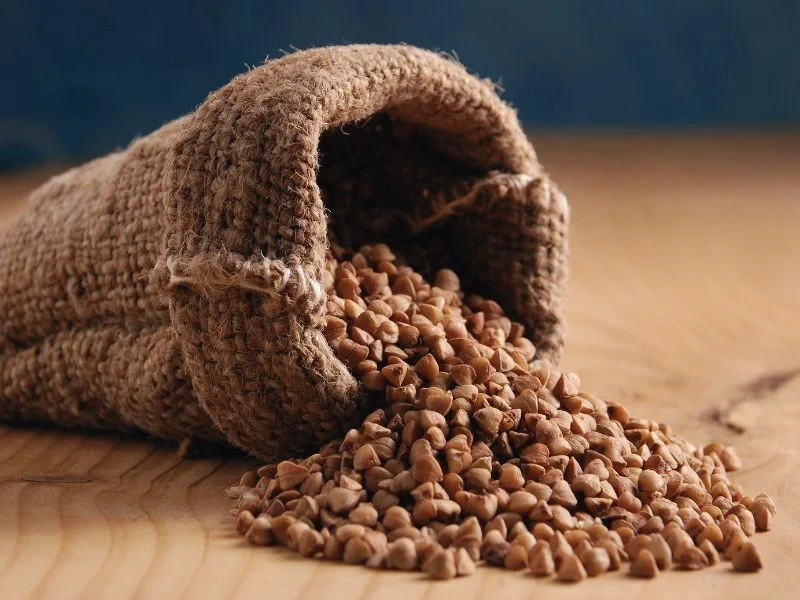
Buckwheat is a pseudocereal increasingly used in gluten-free diets. Despite its name, it is not related to wheat and does not contain gluten, making it suitable for people with coeliac disease or gluten intolerance.
As well as being a gluten-free alternative, it stands out for its nutritional profile, with a significant content of protein, fibre, B vitamins and minerals.
In this article, we examine whether it is advisable to include buckwheat in a gluten-free diet, the origin and cultivation of this pseudocereal, as well as its main nutritional characteristics and its role within a gluten-free diet.
Does buckwheat contain gluten?
One of the most common questions is whether buckwheat contains glutenhttps://www.drschaer-institute.com/en-GB/learn/gluten-free-nutrition/definition-gluten). And the answer is no: unlike cereals such as wheat, barley or rye, buckwheat is naturally gluten-free, as it belongs to the Polygonaceae family and not to the grass family.
For this reason, it can be included in a gluten-free diet, provided there is no cross-contamination during processing. This applies both to the grain itself and to its derivatives:
- Buckwheat flour is naturally gluten-free.
- Buckwheat bread can be gluten-free, provided it is made under controlled conditions.
Therefore, gluten-free buckwheat is a safe option for dietary management in people with gluten-related disorders.
Where is buckwheat grown?
As for the origin of buckwheat, it comes from Asia, specifically from regions such as western China, Tibet and eastern India. Today, its cultivation has spread to various parts of the world, particularly in cold and humid climates.
The main producing countries include China and Russia, followed by other European countries such as France and Poland.

Plant morphology
It is a herbaceous plant that can grow to between 60 and 120 cm in height. It has:
- eart-shaped leaves
- An erect, hairless stem
- Fibrous roots
- White or pink flowers that appear from June onwards
The fruits of buckwheat, known as achenes, are triangular in shape and are the edible part.
Information on sowing and harvesting
Buckwheat is particularly sensitive to weather conditions:
- Sowing usually takes place between May and June
- Harvesting takes place between late August and September
- The growing cycle is short (10-12 weeks)
- Yields may vary depending on temperature and environmental conditions
Nutritional profile of buckwheat
Buckwheat has an interesting nutritional profile that makes it a very good choice for a gluten-free diet:
The role of buckwheat in a gluten-free diet: is it useful?
In short, buckwheat is a nutritionally interesting option within a gluten-free diet, particularly given its content of high biological value proteins, fibre, minerals and antioxidants.
From a clinical perspective, buckwheat can be incorporated into the diet of patients with gluten intolerance or coeliac disease as an alternative to traditional cereals. In fact, it is ideal for improving the nutritional quality of a gluten-free diet.
However, as with any other gluten-free food, it is essential to ensure that there has been no cross-contamination during processing, in order to guarantee the patient’s complete safety.
You may also be interested in...

Coeliac disease: global prevalence and new findings from 2026
Read more: Coeliac disease: global prevalence and new findings from 2026
Dermatitis herpetiformis: the skin as a sign of coeliac disease
Read more: Dermatitis herpetiformis: the skin as a sign of coeliac disease
3 interesting clinical cases from a nutrition consultation
Read more: 3 interesting clinical cases from a nutrition consultation
Sources
Dr. Schär Institute Team