
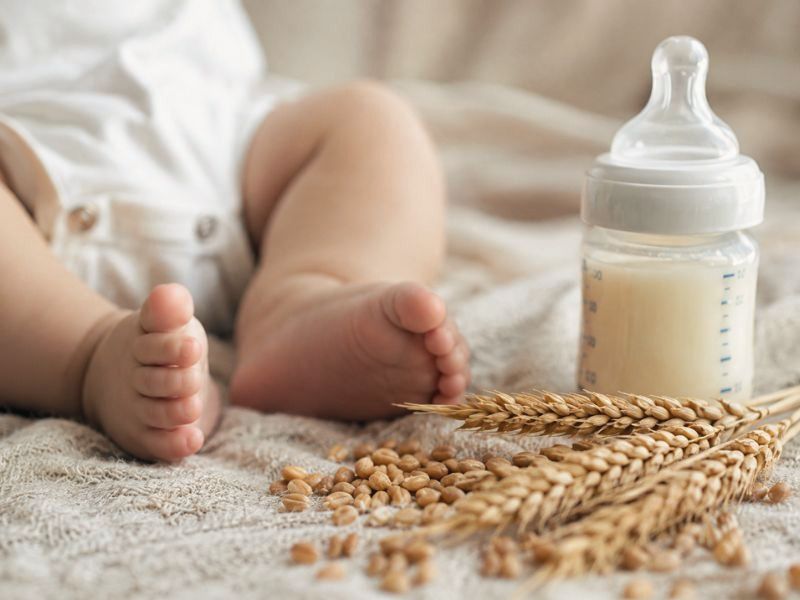
Gluten in Infants: ESPGHAN 2024 Recommendations
What ESPGHAN 2024 says about breastfeeding, the timing and amount of gluten introduction in infants, and its relationship with coeliac disease.
Early Feeding and Coeliac Disease: ESPGHAN Recommendations on Introducing Gluten in Infants
When should gluten be introduced into an infant’s diet? Can breastfeeding reduce the risk of developing coeliac disease? Does the amount of gluten consumed during the first years of life have an impact?
These questions have been the subject of research for many years, particularly in children with a genetic predisposition to developing the condition.
In 2024, the Special Interest Group on Coeliac Disease (SIG-CD) of the European Society for Paediatric Gastroenterology, Hepatology and Nutrition (ESPGHAN) published an update to its position paper on early feeding and the risk of coeliac disease.
Its conclusions help clarify what is currently known about breastfeeding and coeliac disease, the timing of gluten introduction, and the amount consumed during the first years of life.
ESPGHAN 2024 Position Paper: What Has Changed Since 2016?
The 2024 ESPGHAN document reviews the recommendations published in 2016 in light of the new evidence that has become available. Despite the studies published in recent years, the main conclusions remain essentially unchanged.
The group examined various aspects of early feeding that may be linked to the development of coeliac disease:
- Breastfeeding.
- The timing and amount of gluten introduced.
- The type of foods used.
- Genetic predisposition.
One of the key conclusions is that, based on the available evidence, no early feeding strategy has been identified that can prevent coeliac disease.
This is particularly relevant for children with a family history of coeliac disease or HLA variants associated with a higher risk, as researchers have spent years investigating whether specific feeding practices could alter the likelihood of developing the condition. The 2024 paper found insufficient evidence to support different recommendations re garding gluten consumption according to different HLA risk profiles.
Breastfeeding and Coeliac Disease
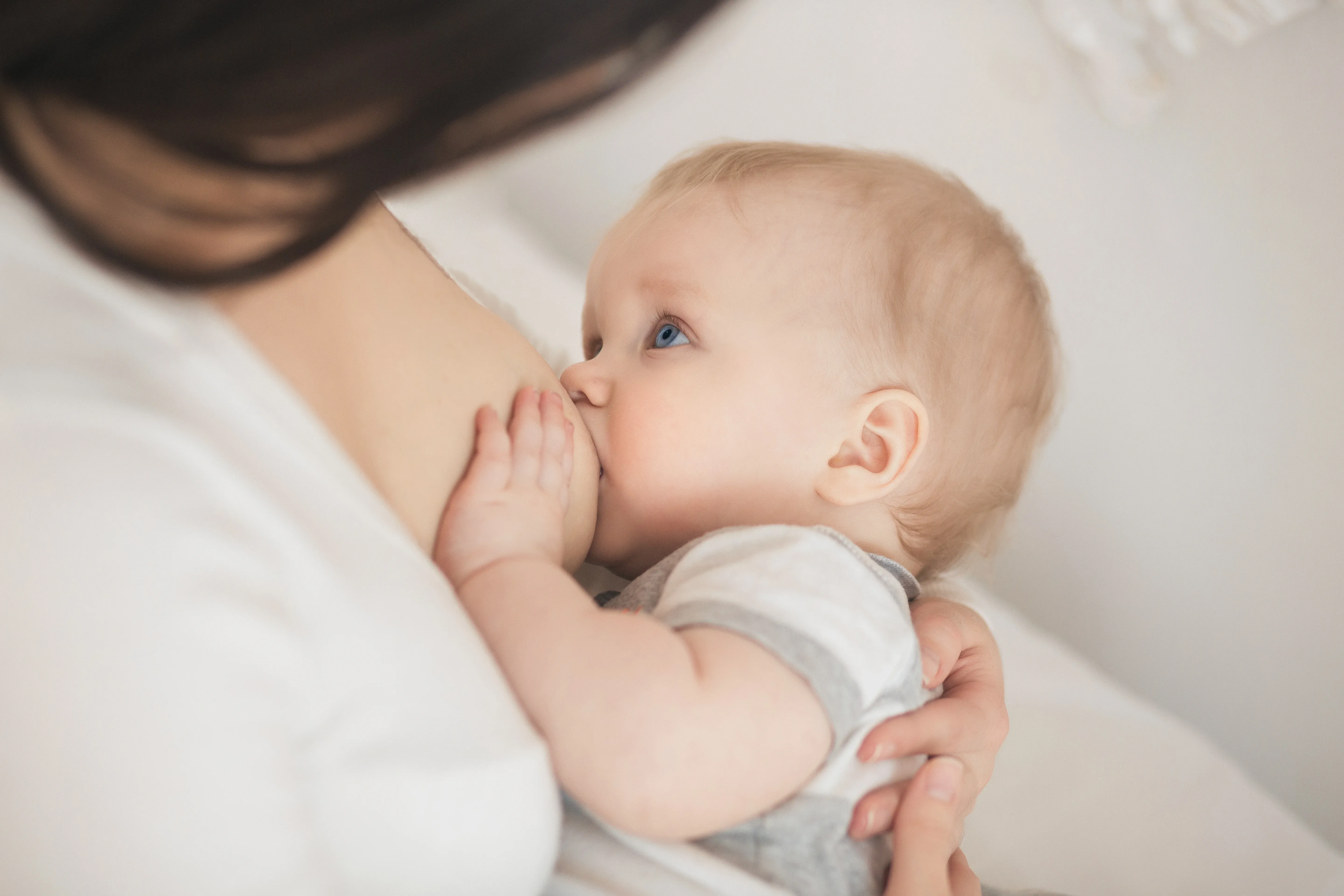
Breastfeeding provides numerous health benefits for infants. However, it has not been shown to reduce the risk of developing coeliac disease during childhood. According to the ESPGHAN position paper, neither breastfeeding versus not breastfeeding, nor exclusive breastfeeding until six months of age versus a shorter duration, has been shown to reduce the risk of coeliac disease. Nor has any protective effect been demonstrated from introducing gluten while the infant is still being breastfed. Therefore, breastfeeding practices should not be modified with the specific aim of preventing coeliac disease, regardless of whether the child has a known genetic risk.
When Should Gluten Be Introduced into an Infant’s Diet?
Another issue examined is the optimal timing for introducing gluten.
According to the position paper, gluten may be introduced between four completed months of age (that is, from 17 weeks onwards) and 12 months of age, without the timing chosen within this interval appearing to influence the cumulative risk of developing coeliac disease autoimmunity or coeliac disease itself during childhood.
This means that delaying gluten introduction within this timeframe has not been shown to prevent coeliac disease.
There is, however, an important nuance: earlier introduction may be associated with an earlier onset of seroconversion and coeliac disease. In other words, it may influence when the disease develops, but not necessarily the overall risk of developing it.
The paper also does not identify any specific gluten-containing food as being preferable during this stage. Available evidence has not shown that the type of gluten introduced affects risk, and therefore no specific recommendations can be made regarding which gluten-containing food source should be used.
Amount of Gluten During Weaning and Early Childhood
In addition to timing, recent years have seen growing interest in whether the amount of gluten consumed by infants and young children may influence the development of coeliac disease.
Several observational and case-control studies conducted in genetically predisposed children have found an association between higher gluten intake during weaning and the first years of life and an increased risk of developing coeliac disease autoimmunity or coeliac disease itself. This association has been observed particularly during the first two to three years of life and, in some studies, up to five years of age.

However, these findings do not allow a specific amount of gluten to be identified as optimal or safe.
The quantities examined vary considerably between studies because of differences in dietary habits across countries and the various methods used to estimate gluten intake.
For this reason, the position paper concludes that it is currently not possible to recommend a specific amount of gluten during weaning or the first years of life, either for children with unknown risk status or for those with a known predisposition to developing coeliac disease.
Likewise, there is insufficient evidence to recommend restricting gluten in healthy children as a strategy to prevent coeliac disease.
Practical Conclusions for Healthcare Professionals
The 2024 update reinforces an important message: despite advances in our understanding of early feeding and coeliac disease, there is still no gluten introduction strategy that has been proven to prevent the development of the condition.
Based on the evidence reviewed by the ESPGHAN Special Interest Group, several key points emerge for clinical practice:
- Breastfeeding has not been shown to reduce the risk of developing coeliac disease.
- Continuing breastfeeding while introducing gluten has not been shown to provide a specific protective effect.
- Gluten may be introduced between four completed months (17 weeks) and 12 months of age without affecting the cumulative risk of developing coeliac disease.
- Higher gluten consumption during the first years of life has been associated in observational studies with a greater risk in predisposed children, but neither an optimal intake nor a safe threshold has been established.
- No specific amount of gluten can be recommended for the prevention of coeliac disease.
- There is insufficient evidence to recommend any particular gluten-containing food when introducing gluten.
- There is insufficient evidence to support different recommendations on gluten intake based on HLA risk profile.
Therefore, recommendations regarding gluten in infants should not be viewed as a specific strategy for preventing coeliac disease. The available evidence continues to leave important questions unanswered, particularly regarding the amount of gluten consumed during the first years of life.
You may also be interested in...

Coeliac disease: global prevalence and new findings from 2026
Read more: Coeliac disease: global prevalence and new findings from 2026
Dermatitis herpetiformis: the skin as a sign of coeliac disease
Read more: Dermatitis herpetiformis: the skin as a sign of coeliac disease
3 interesting clinical cases from a nutrition consultation
Read more: 3 interesting clinical cases from a nutrition consultation
Sources
Fuente Szajewska H, Shamir R, Auricchio R, Chmielewska A, Dolinsek J, Kivelä L, et al. Early diet and the risk of coeliac disease. An update 2024 position paper by the ESPGHAN special interest group on coeliac disease. Journal of Pediatric Gastroenterology and Nutrition. 2024;79(2):438-445. DOI: 10.1002/jpn3.12280.
Autor Dr. Schär Institute