

Coeliac disease and metabolic syndrome: why it is important to discuss nutritional balance
A review in Frontiers in Nutrition analyses the link between coeliac disease and metabolic health: mechanisms, importance of a high-quality gluten-free diet, nutritional counselling and implications for the health of paediatric patients.
Coeliac disease and metabolic syndrome: why it is important to discuss nutritional balance today
Over the last years, coeliac disease has undergone significant developments not only from a diagnostic perspective, but also from clinical and nutritional standpoints. Alongside the classic issues related to malabsorption, the scientific literature is beginning to highlight an increasingly relevant aspect in clinical practice: the relationship between coeliac disease and metabolic health, particularly in paediatric patients.
A recent review published in Frontiers in Nutrition analyses precisely this link, emphasising that the nutritional management of coeliac patients must now consider not only gluten exclusion, but also the correct balance of nutrients and the overall quality of the diet in order to reduce the risk of developing alterations in metabolic pathways (1).
From malnutrition to metabolic risk: a shift in perspective
Traditionally, coeliac disease was associated with underweight and nutritional deficiencies. Today, however, a growing proportion of children and adolescents are diagnosed whilst being overweight or obese.
This shift requires a broader clinical perspective: alongside managing gluten exclusion, it is necessary to consider the patient’s long-term metabolic profile. A proportion of people with coeliac disease may develop visceral adiposity, dyslipidaemia or changes in body composition, making nutritional monitoring an integral part of follow-up.

The mechanisms linking coeliac disease and metabolic alterations
Coeliac disease is not merely an autoimmune enteropathy: it can be considered a systemic disorder with metabolic repercussions. Exposure to gluten triggers, in fact, a series of changes common to other metabolic disorders:
Taken together, these factors act synergistically, through intestinal damage, immune activation and nutritional deficiencies, to amplify the inflammatory and metabolic pathways shared with metabolic syndrome, highlighting the importance of active nutritional and metabolic monitoring in patients with coeliac disease.
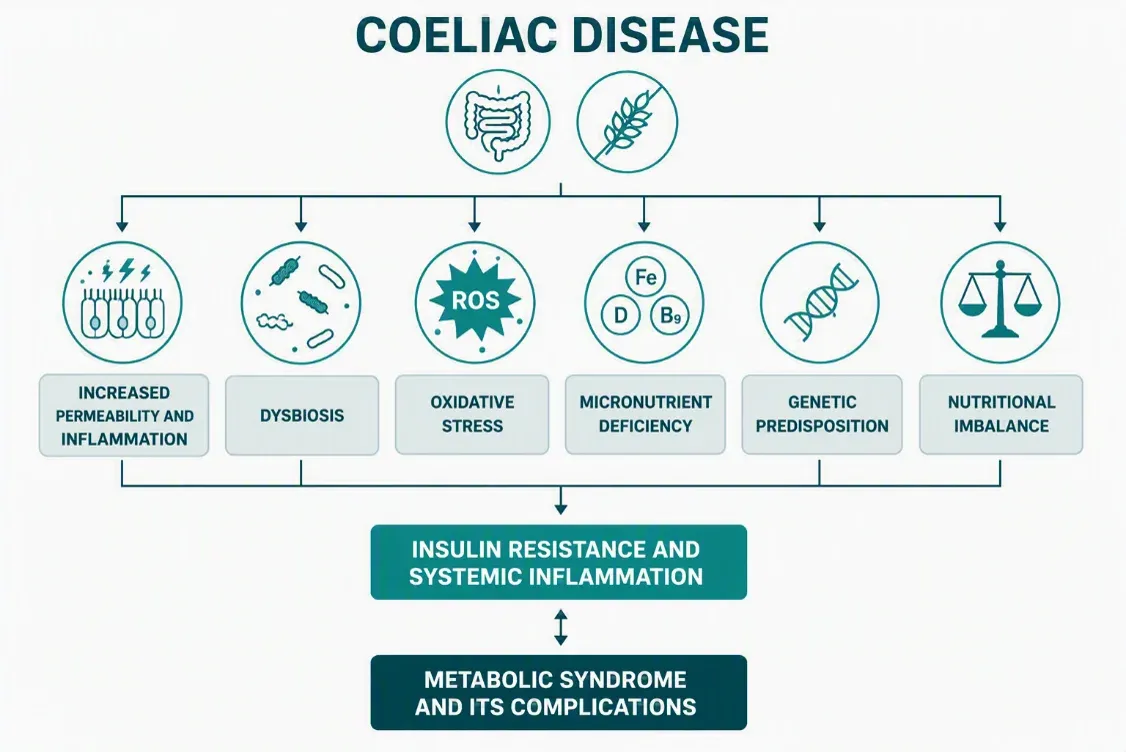 Figure1 . Pathophysiological mechanisms linking coeliac disease to metabolic syndrome (adapted from Zuccotti G et al. 2026)1 .
Gluten-free diet: the focus must be on nutritional quality
A gluten-free diet is the cornerstone of coeliac disease treatment and is the only therapeutic tool available to clinicians capable of bringing about clinical improvement in patients. However, a gluten-free diet should be designed whilst also taking overall nutritional balance into account. In particular, a diet that is nutritionally unbalanced may result in excessive calorie intake or reduced intake of fibre and micronutrients, factors that could increase the risk of developing metabolic disorders such as dyslipidaemia, insulin resistance and visceral adiposity.
For this reason, the authors recommend that nutritional counselling should be guided by a gluten-free Mediterranean model that takes into account:
- dietary variety;
- proper distribution of macronutrients;
- adequate consumption of pulses, fruit and vegetables
- adequate fibre intake;
- consumption of naturally gluten-free foods.
In addition to dietary composition, a significant role is attributed to the education of patients and carers, with the aim of guiding them in reading labels and understanding the implications of cross-contamination.
For paediatric patients, a personalised nutritional strategy is recommended, which also takes into account specific energy requirements in relation to growth rate, stage of development and monitoring of micronutrients.
Finally, the involvement of a dietitian and a multidisciplinary team is highlighted as a key element in ensuring personalised and sustainable long-term management.
Conclusion
The review published in Frontiers in Nutrition offers a modern perspective on coeliac disease, in which a gluten-free diet should not be viewed solely as the elimination of gluten, but as part of a comprehensive and balanced nutritional approach.
For healthcare professionals, the message is clear: guiding patients towards a balanced, varied and nutritionally adequate gluten-free diet is now central to promoting metabolic wellbeing, proper growth in paediatric patients and long-term health.
You may also be interested in...

Coeliac disease: global prevalence and new findings from 2026
Read more: Coeliac disease: global prevalence and new findings from 2026
Dermatitis herpetiformis: the skin as a sign of coeliac disease
Read more: Dermatitis herpetiformis: the skin as a sign of coeliac disease
3 interesting clinical cases from a nutrition consultation
Read more: 3 interesting clinical cases from a nutrition consultation
Sources
- Zuccotti G, Calcaterra V, Rossi V, et al. Celiac disease and metabolic syndrome: from risk to a preventive opportunity, in the perspective of children's health. Front Nutr. 2026;13:1751559. Published 2026 Jan 23. doi:10.3389/fnut.2026.1751559