
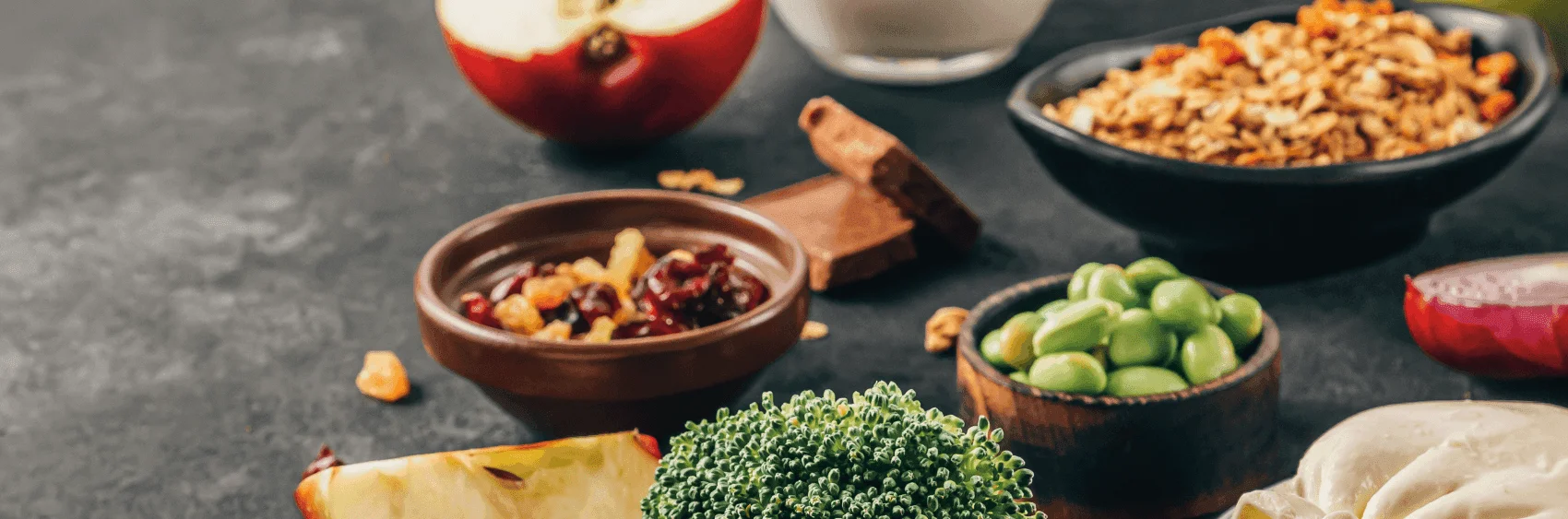
What are FODMAPs? High- and low-FODMAP foods
Discover what FODMAPs are and what this structured diet therapy consists of. Analysis and guide to foods high and low in FODMAPs.
What are FODMAPs? Complete list for the restrictive phase and why it cannot be universal
When people ask me what FODMAPs are, I usually explain that it is not simply a list of prohibited and permitted foods. The term FODMAP refers to a group of short-chain carbohydrates (Fermentable Oligosaccharides, Disaccharides, Monosaccharides and Polyols) that can trigger digestive symptoms in predisposed individuals.
The so-called low-FODMAP diet is actually a set of dietary interventions that restrict, to a greater or lesser extent, fermentable sugars in the patient's diet. It is a diet therapy structured in three phases and 100% personalised, whose objective is not to maintain indefinite restrictions, but to identify individual tolerance and ultimately achieve the most varied diet possible for each case.
Therefore, although many people look for a "complete list" of high- and low-FODMAP foods, I must clarify that this simplification does not reflect the real complexity of an approach that must always be adapted on an individual basis.
What are the phases of the low-FODMAP diet?
Dietary intervention based on low-FODMAP foods consists of three phases:
- Initial restrictive phase, of limited duration.
- Progressive reintroduction by FODMAP groups, assessing tolerance.
- Personalisation and maintenance, with as varied a diet as possible.
This is why reducing the low-FODMAP diet to a simple list of foods can lead to errors, especially when portion sizes and the patient's clinical context are not taken into account.
Why it is difficult to find a complete list of FODMAPs
The classification of low- and high-FODMAP foods depends on several factors that are often overlooked:
All these nuances explain why a complete list of foods allowed on the FODMAP diet cannot be interpreted without taking into account the portion size and format of the food.
Where to find reliable information
Even so, we can find reliable information that takes all of the above into account. In my practice, I use data provided by Monash University, a pioneer in the development of this diet therapy. Through their website and mobile app, they analyse foods by serving size and specific FODMAP content, allowing for a much more accurate approach than generic lists.
What to do as a healthcare professional (and why not prescribe it without supervision)
In my experience, the FODMAP diet therapy should not be applied without specialised supervision. My recommendation is to always refer the patient to a dietitian-nutritionist with specific training in this approach. Ultimately, it is a structured intervention that requires individual assessment and follow-up, so I do not recommend starting it on your own.
FODMAP table: low-FODMAP foods for the restrictive phase (practical guidance)
The following table lists examples of foods allowed on the FODMAP diet during the restrictive phase, bearing in mind that portion sizes are crucial:
Final note on the reintroduction phase
Why it cannot be standardised in a table
The subsequent phase cannot be summarised in a standard table. Reintroduction must be carried out in a structured manner, evaluating symptoms and adjusting quantities on an individual basis.
Precisely because of this degree of personalisation, it is not possible to provide a complete list applicable to all patients beyond the initial restrictive phase.
You may also be interested in...
Coeliac disease: global prevalence and new findings from 2026
Read more: Coeliac disease: global prevalence and new findings from 2026
Dermatitis herpetiformis: the skin as a sign of coeliac disease
Read more: Dermatitis herpetiformis: the skin as a sign of coeliac disease
3 interesting clinical cases from a nutrition consultation
Read more: 3 interesting clinical cases from a nutrition consultation