

Oral manifestations in coeliac disease: prevalence, symptoms, and associated factors
Discover the most common oral manifestations in coeliac disease, their prevalence, risk factors, and how early diagnosis and a gluten free diet can improve symptoms.
Oral manifestations in coeliac disease
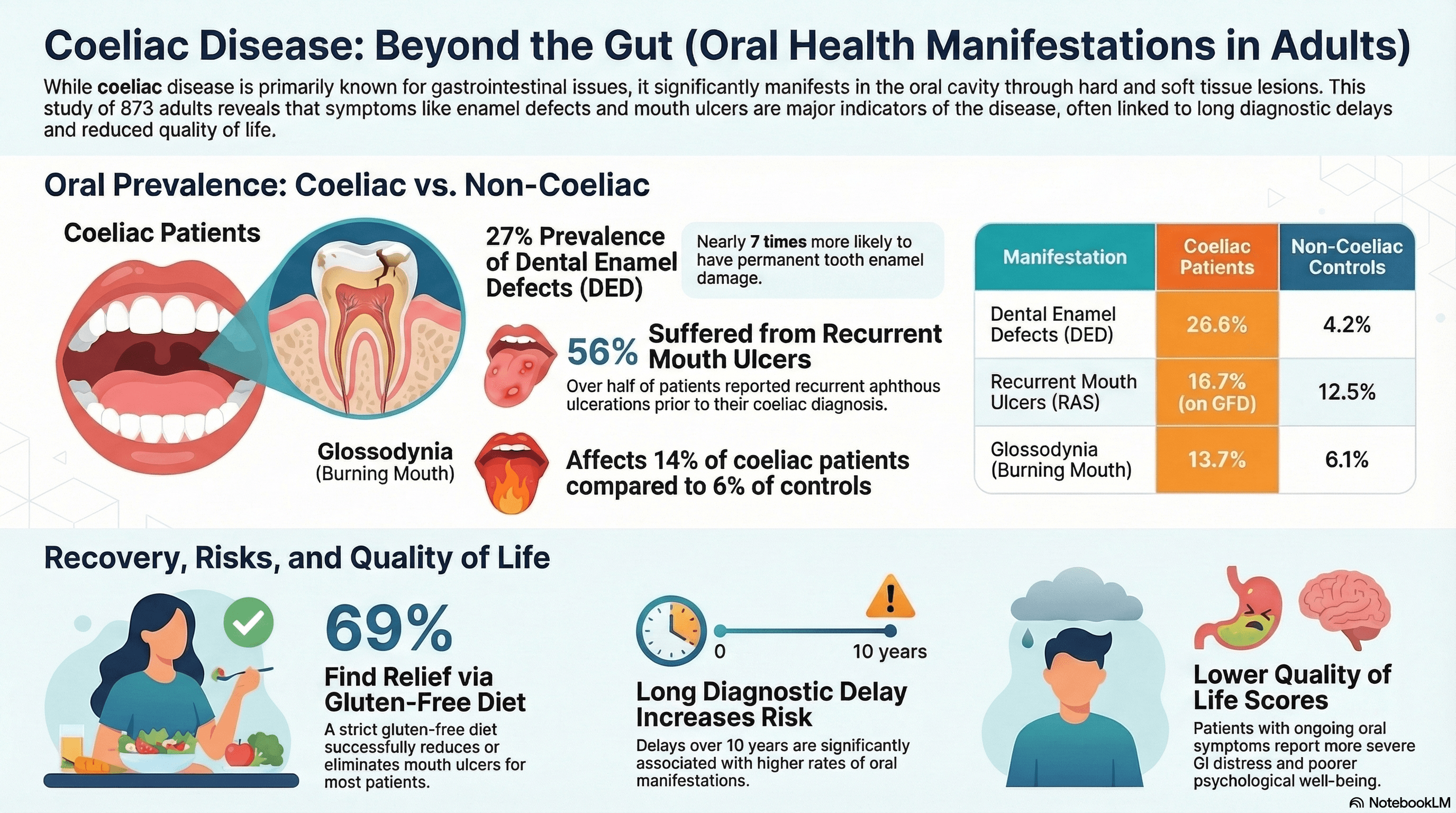
Coeliac disease can occur at any age and present with a wide range of symptoms. Although it is typically associated with gastrointestinal issues, it can also produce extra intestinal manifestations, including those affecting the oral cavity. Common oral signs include dental enamel defects (DED), recurrent aphthous stomatitis (RAS), and glossodynia (burning mouth). A recent Finnish study evaluated the prevalence of these symptoms and their associated clinical factors in adult coeliac patients.
Objective of the study
The aim was to assess the prevalence of oral manifestations in adults with coeliac disease and identify the factors associated with these conditions.
Methodology
The study included:
- 873 adults with biopsy confirmed coeliac disease or dermatitis herpetiformis
- 563 non coeliac controls
- Recruitment: Finland (2006–2010)
Participants completed structured interviews and questionnaires that assessed:
- Dental enamel defects
- Recurrent aphthous ulcers
- Glossodynia
- Gastrointestinal symptom severity (GSRS)
- Quality of life (PGWB)
Key results
Key results
- Oral manifestations were significantly more common in coeliac patients than in controls, both at diagnosis and while on a gluten free diet.
- Dental enamel defects: 27% of coeliac patients vs 4% of controls
- Recurrent aphthous ulcers: experienced by 56% before diagnosis, with 69% improving on a gluten free diet
- Glossodynia: more common even on a gluten free diet (14% vs 6%)
Factors associated
• DED: long diagnostic delay, diagnosis before 1990, abdominal symptoms • RAS: female sex, abdominal symptoms • Glossodynia: female sex, abdominal symptoms
Quality of life
Patients with persistent oral symptoms reported more severe gastrointestinal complaints and poorer quality of life.
Conclusion
Oral manifestations are common in coeliac disease, especially among women and those with the classical abdominal symptom profile. Early diagnosis and adherence to a gluten free diet may prevent or improve symptoms.
You may also be interested in...

A holistic view of the pathogenesis of irritable bowel syndrome (IBS)
Read more: Pathogenesis
Accurate Diagnosis of Coeliac Disease - Importance of Appropriate Serological and Histological Interpretation
Read more: Case study: Accurate Diagnosis of Coeliac Disease
Coeliac disease: clinical signs up to 7 years before diagnosis
Read more: Coeliac disease: clinical signs up to 7 years before diagnosis
Sources
Manninen et al. BMC Gastroenterology (2025) 25:126