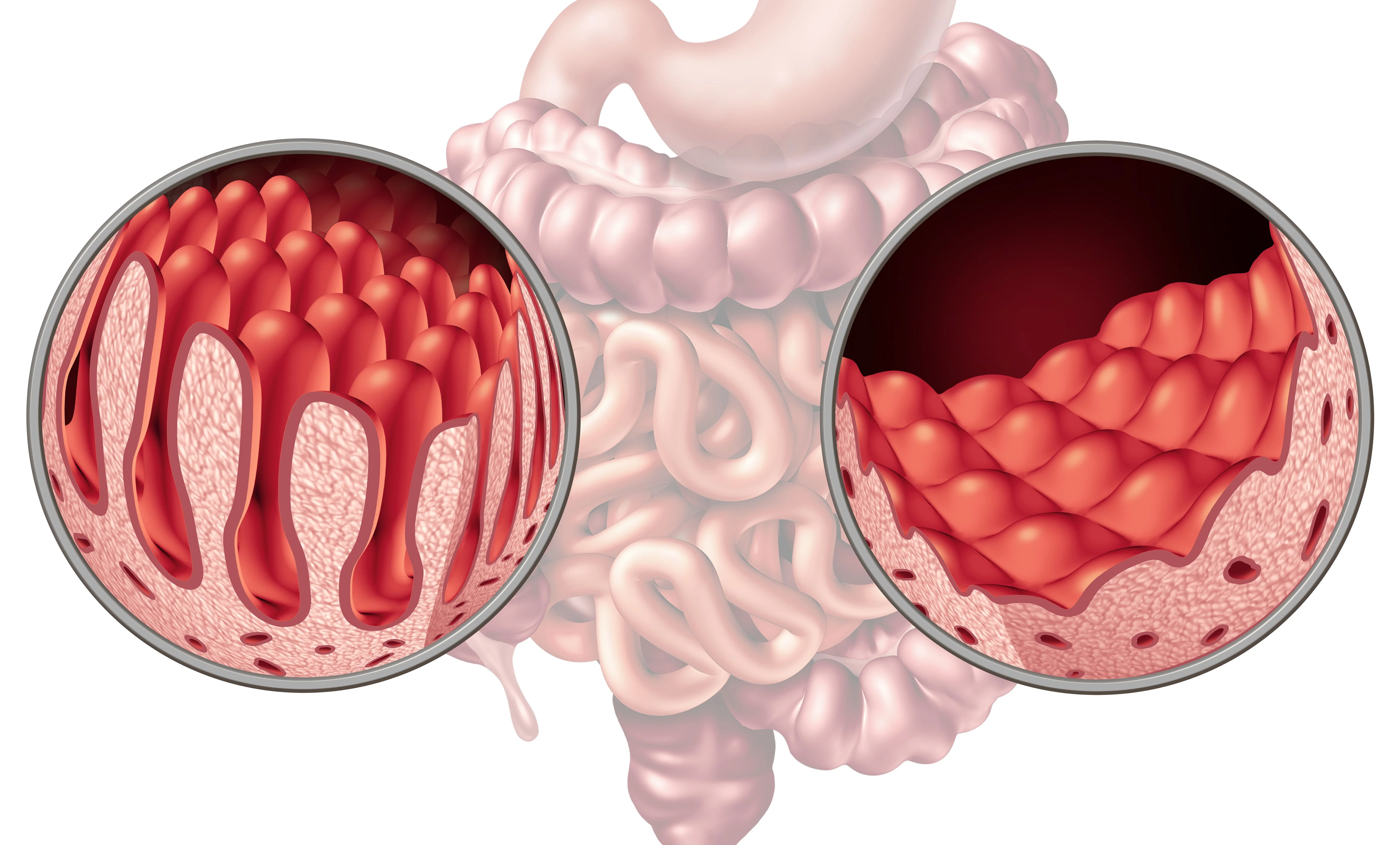
Coeliac disease: Histological remission and follow-up care on a gluten-free diet
A recent analysis shows how histological findings develop in adults with coeliac disease on a gluten-free diet and why follow-up care should be standardised.
Histological follow-up in adults with coeliac disease on a gluten-free diet
There is still no consensus on histological follow-up during long-term treatment of adult patients with coeliac disease who are following a gluten-free diet. Despite clinical and serological improvement, some of those affected continue to show persistent villous atrophy. The aim of the study by Daniel Vasile Balaban et al. was to summarise the current evidence on histological findings in adults with coeliac disease following a gluten-free diet. The study focused on the rate of mucosal healing, the assessment methods used and the underlying remission criteria. To this end, a literature review was conducted, evaluating data from published cohort studies involving adult coeliac patients on a gluten-free diet. Biopsy data and demographic information, baseline histology, duration and adherence to the gluten-free diet, serological status and histological remission rates, including the remission criteria used, were extracted from the follow-up phase.
Results of the analysis
The analysis included 46 studies involving a total of 15,530 patients, 73.3% of whom were women. The mean age was 41 years. The average histological remission across all cohorts was 58.8%. However, the interpretability of this mean value is limited, particularly due to differing definitions of histological remission. These ranged from strict criteria such as Marsh 0 to broader definitions, in which Marsh 1 or a non-atrophic mucosa (Marsh < 3) were also classified as remission. Morphometric thresholds, such as the ratio of villous height to crypt depth, also influenced the reported remission rates.
Importance of the gluten-free diet and standardised follow-up
Of particular relevance to nutritional therapy practice is the finding that a longer duration of the gluten-free diet and strictly monitored dietary adherence were associated with better histological outcomes. Histological remission in adult patients with coeliac disease on a gluten-free diet varies. The reported remission rates depend largely on how histological remission is defined and how dietary adherence is assessed. Standardised and validated criteria for assessing histological progression and adherence to the gluten-free diet are therefore necessary to ensure consistent follow-up care.
You may also be interested in...

Case study: Persistent IBS Symptoms with suspected histamine and gluten-related food intolerance
Read more: Case Study: Persistent IBS Symptoms with suspected histamine and gluten-related food intolerance
Irritable bowel syndrome diagnostics in practice
Read more: Diagnosis